Energy and Sports Drinks

Energy Drinks

Many people rely on some type of energy boost to get them through the day.  That might be a cup or two of coffee, a sugary caffeine-filled pop or the popular energy drink.  Energy drinks are a huge business.  The worldwide energy drink market is expected to reach $61 billion in 2021.  Over the last 10 years, energy drinks has become a close second to coffee when it comes to getting your hit of energy.  At the beginning of the energy drink craze there was limited choice when purchasing the beverage.  Now you can find energy drinks with different types of flavours, strengths and different blends of ingredients.

Most popular brands of energy drinks are:

  • Red Bull – the original energy drink
  • Monster – the second-highest selling brand on the market
  • Rockstar
  • Nos
  • Xyience
  • Bang
  • Amp
  • Celsius
  • Zevia
  • V8 + Energy

The World Health Organization and the American Academy of Pediatrics both agree that consuming energy drinks can be unhealthy, especially for children.  The American Beverage Association however believes that the drinks are safe and that many of the ingredients found in the drinks are also found in foods that we eat on a regular basis.

It is important to note that energy drinks are not recommended and can be dangerous for anyone under 18, women who are pregnant, people who have caffeine sensitivities, people who don’t consume caffeine on a regular basis and those who are taking medications such as Adderall for ADD.

What exactly is in your energy drink?

  • Caffeine
  • Added sugars
  • Vitamins, such as B vitamins
  • Legal stimulants, such as guarana (a plant that grows in the Amazon)
  • Taurine, an amino acid that is found in meat and fish
  • L-carnitine, helps turn fat into energy

What is concerning to the health professionals about these added ingredients is that they are often in higher concentrations than found naturally in the food or plants we consume and when you combine them with caffeine there can be a negative effect on your body.

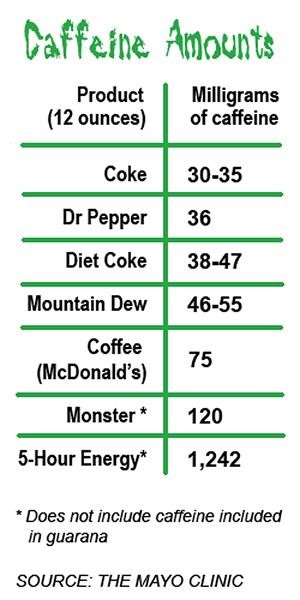
Up to 400 mg of caffeine a day is considered to be safe for most healthy adults.  That is the amount of caffeine you would find in four cups of coffee.  Adolescent’s ages 12 to 18 intake of caffeine should be 100 mg per day.  That is equivalent to one cup of coffee or two cans of pop.  The amount of caffeine found in a 24oz energy drink is 276 mg.  The popular Starbucks Doubleshot Energy Coffee in a can has 145 mg of caffeine.

Comparison of Caffeine Amounts in Popular Beverages
What can happen to your body when consuming an energy drink?

–    Increased heart rate.  This could be due to the interaction of caffeine with other ingredients, such as the taurine.

–    Stress levels go up.

–    Increased blood pressure.

–    Some studies have shown that energy drinks can make the blood become a little thicker.

The effects of energy drinks on the brain

The effects of caffeine on the brain will depend on how many energy drinks you consume.  Too many energy drinks and subsequently too much caffeine can result in a person experiencing anxiety, insomnia, stomach irritation, muscle twitching, restlessness and tiredness.

Sport Drinks

Sport drinks are flavoured beverages that contain water, sugar and electrolytes such as sodium, potassium and magnesium.  Some of these drinks may also contain added vitamins such as vitamin C or B vitamins. 

The drinks are marketed as beverages that replenish electrolytes lost during exercise, supply carbohydrates, prevent dehydration and help sustain energy levels.  They help when someone is exercising for a long period of time and are sweating a lot.  Athletes training and competing lose water and electrolytes by sweating and expending energy.  The sports drink will help replace the sodium lost in sweat and keep you hydrated.  It is best to sip on the sports drink every 10 to 15 minutes rather than guzzle it down.  But, unless someone is exercising or competing for more than 90 minutes there is really not reason to consume a drink with extra sugar and electrolytes.  It is believed that the intake of extra salt during exercise may actually cause stomach problems as well as salt-induced cramps.  If you have been sweating for more than 45 minutes doing an activity sports drink is a better option than drinking water.

There are three major types of sport drinks:

1.    Isotonic sport drinks:         Contain similar concentration of salt and sugar as in the human body.

2.    Hypertonic sport drinks: Contain a higher concentration of salt and sugar than the human body.

3.    Hypotonic sport drinks:     Contain a lower concentration of sale and sugar than the human body.

Most sport drinks are isotonic and have between 4 and 5 heaping teaspoons of sugar per 8oz. serving.  A 20oz Gatorade has 34 grams of sugar.

Most popular brands of sport drinks are:

  • Propel – Good if you’re looking for a sports drink that has zero calories, sugar-free and full of electrolytes.
  • Scivation – Good for weightlifters who are focusing on building muscle mass.  This is a sports drink that will do more than just keep you hydrated.  The drink includes 7 grams of branched amino acids or BCAAs which help with muscle recovery after activity.
  • Nooma – An organic sports drink that is plant-based, non-GMO and vegan-friendly.  Each drink is only 30 calories with no added sugar.  It contains coconut water which adds potassium to your drink.
  • Gatorade – Contains electrolytes and carbohydrates and added sweet flavour.  It is the most reasonably priced drink.  To cut down on the amount of sugar you are consuming with this drink you can use a few tablespoons of Gatorade mixed with cold water to still get the effects of the drink without all the sugar.

How to be an Educated Consumer of Sports Drinks

Read the Label
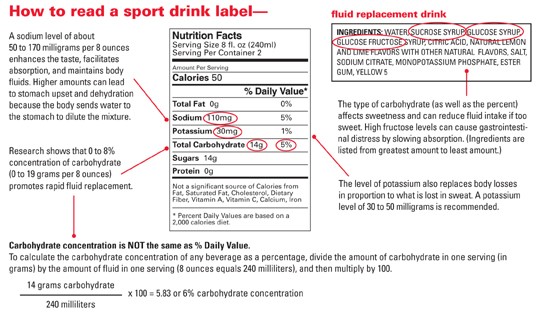
If you are not consuming them for their actual purpose (high activity exercise and sports) they can have a negative effect on your body.  One of the effects of drinking sports drinks with carbohydrates and not engaging in prolonged exercise is weight gain.  There was a study that found that teenagers who drank one sports drink per day for two years gained 3.5 pounds.  This was more weight gain than if you drank one pop every day for two years.  The drinks are unnecessary for children who engage in routine physical activity.
Becoming Organic

Becoming Organic

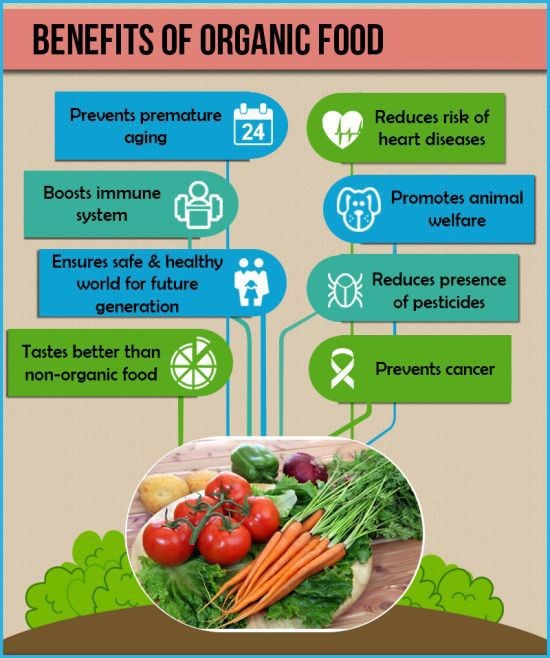
So, you’ve decided that you would like to embrace a healthier lifestyle by eating organic.  The term organic refers to the way in which agricultural products are grown and processed as well as food that is produced using environmentally and animal friendly farming methods.  When someone decides they would like to eat organically it simply means selecting foods that are organically certified.  This means fruits and vegetables have been grown without the use of pesticides, synthetic fertilizers, sewage sludge, genetically modified organisms, or ionizing radiation.  With respect to animal products and being organic, the animal providing the meat, poultry, eggs and dairy products have not taken any antibiotics or growth hormones.  Organic standards also ban the use of artificial food colours, flavours, sweeteners, preservatives and other processing aids and ingredients found in processed foods.

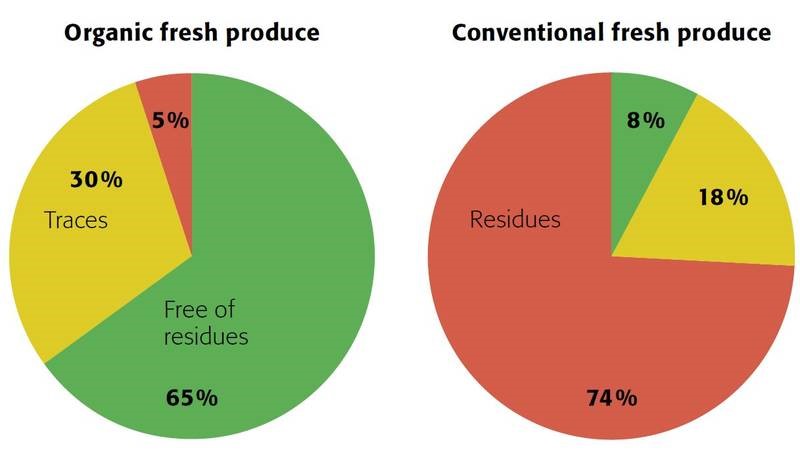
Pesticide Residues on Organic and Conventional Fruits and Vegetables

Reasons to choose organic products?

1.    Eliminating harmful chemicals from your diet.  Many herbicides and insecticides are often used in farming and have been found to be carcinogenic, hormone replicators and negative for children’s development.

2.    Organic farming builds healthy ecosystems, and has a higher biodiversity which promotes sustainability as well as an ecological balance.

3.    Help to reduce pollution and wasted energy.  It takes more energy to produce synthetic fertilizers than to cultivate and harvest crops.  Studies have found that organic farming uses as little as half of the energy of other farming methods.

4.    Protects the health of farmers and children.  Farmers who are exposed to pesticides have a higher risk of contracting cancer compared to non-farmers.  Children are also at a higher risk of disease when consuming food that has been exposed to harmful chemicals.

5.    Organic farms are keeping farms alive.  On average, organic families earn more from their farms than non-organic farms.  They also employ more people per farm as well.

6.    Organic food great tastes.  Healthy soil produces strong, healthy plants that are more nutrition for people and animals.

While research cannot prove conclusively that organic food is more nutritious some studies have found that a diet that includes organic fruits and vegetables helps to increase your consumption of vitamin, minerals, antioxidants, and essential fatty acids.  Non-organic food often contains pesticides and hormones that are harmful to your overall health.  Pesticides are poisonous and therefore are not something you want to be ingesting.  Pesticides can cause neurological problems, cancer, infertility, nausea, vomiting, diarrhea, allergies and asthma, wheezing, rashes, and other skin problems, ADHD, birth defects and more.

It is also important to buy locally whenever possible.  Depending on what is available to you in your area this may limit some of the fruits and vegetables that you will have access to.  The benefits to buying locally is it helps to support your local economy as well as reducing greenhouse gasses and eliminates the need to transport your food from far away countries.  A great way to find local products in your area is to visit your local farmer’s market.  You can also shop at small organic shops where you live as they can usually find what you are looking for.  Another great way of getting organic goods it to try a service that delivers fruit and vegetables to your home.  These boxes are becoming very popular and are a great way of trying fruits and vegetables that you wouldn’t normally purchase.  When buying meat and eggs from small farms be sure to ask the farmer how the animals have been raised and whether they have been fed any antibiotics or hormones.

Making the commitment to buy organic can be expensive. It definitely costs more to purchase organic vs. conventional foods.  The best way to get organic foods to be more affordable and available to more people is to purchase organics and show consumer support for the organic farmers.  Companies will then meet that demand with better, more competitive prices. 

To help you decide where best to spend your money a list called the “dirty dozen” was created.  It lists the foods that you should be buying organic.  These foods have the highest concentrations of pesticides.  They include:

                        –   Apples                                         –    Bell peppers

                        –   Strawberries                                –    Imported nectarines

                        –   Grapes                                         –    Cucumbers

                        –   Celery                                          –    Cherry tomatoes

                        –   Peaches                                       –    Imported snap peas

                        –   Spinach                                       –    Potatoes

There is also a list called the “clean fifteen”.  This list contains foods that are the least likely to contain high levels of pesticides.  You can save some money and not purchase these organics.

                        –   Avocados                                    –    Onions

                        –   Sweet corn                                  –    Mangoes

                        –   Pineapple                                     –    Papayas

                        –   Cabbage                                      –    Asparagus

                        –   Frozen sweet peas                       –    Kiwis

                        –   Eggplant                                      –    Grapefruit

                        –   Cantaloupe                                  –    Cauliflower

                        –   Sweet potatoes

One great benefit to eating organic is the taste.  Organic foods tend to have a fresher flavour than non-organics.  Organic foods contain no artificial preservatives and they sit on the shelf for less time.  That results in a fresher, better tasting product.

Food Preparation Techniques

Food Preparation Technique – Instant Pot

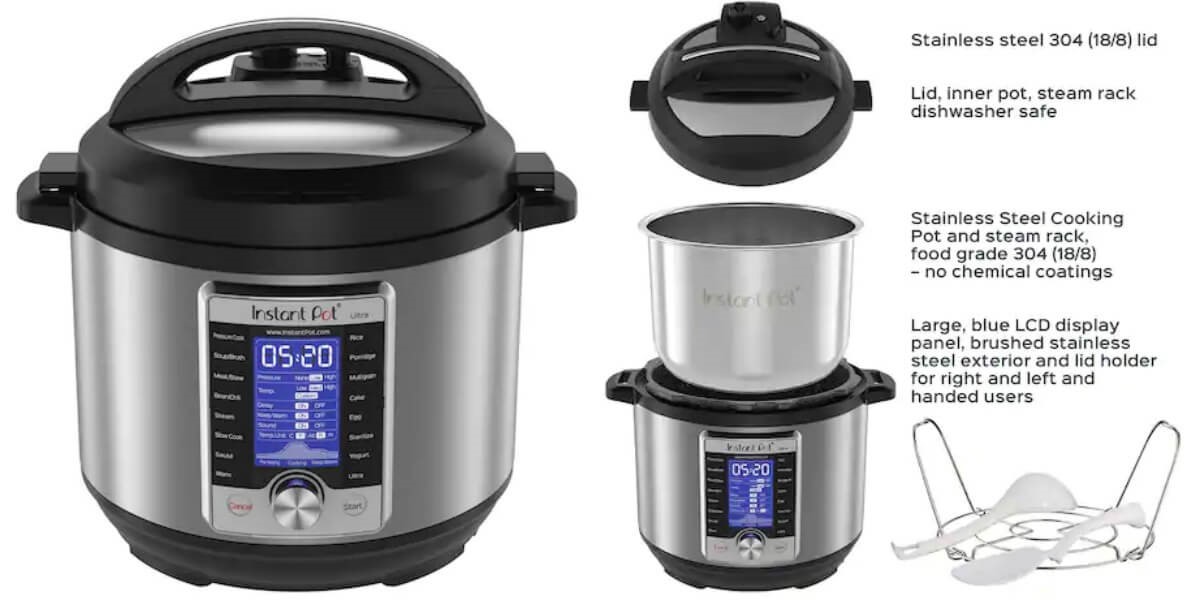
Instant Pots are the latest food appliance that everyone is obsessed with.  It’s a multi-use, programmable pressure cooker designed by Canadians with the objective of being convenient, dependable and safe.  It’s like having 7 kitchen appliances in 1.  It can work as a pressure cooker, slow cooker, rice cooker, steamer, yogurt maker, saute pan and warming pot.  The Instant Pot prepares dishes efficiently and faster, which is great for families with busy, hectic lives.  It’s a useful way of cooking because it has a saute function that allows you to brown meat and vegetables before you use the slow cooker function.  That means everything can be done in one pot.  Imagine being able to come home from work, take a chicken out of the freezer, put it in your Instant Pot for an hour and you have dinner.  You can also program the Instant Pot to cook foods such as soup, meat/stew, beans, chili, chicken, sauté/simmer rice, and oatmeal.

Below are several benefits of pressure cooking:

  • Saves Time and Energy

            –      Electric pressure cookers are very energy efficient.

            –      Pressure cookers require less liquid than traditional cooking, therefore speeding up the boiling time.

            –      Compared to other cooking methods, such as baking, boiling and steaming, pressure cooking is 70% faster.

  • Retains Vitamins & Nutrients

            –      The method of boiling and steaming food decreases foods nutritional value.

            –      Pressure cookers cook the food quickly, deeply and evenly which allows foods to retain up to 90% more of essential vitamins.

  • Preserves Food’s Appearance and Taste

            –      When you cook food in a pot that is open (even when using a lid) the food is exposed to oxygen and heat.  This can take away the colour and flavours of food.

            –      Pressure cooking penetrates food with steam which helps with the retention of bright colours and nutrients.

  • Eliminates Harmful Microorganisms

            –      Because the pressure cooker boils liquids at more than 100 degrees celsius it is able to destroy harmful bacteria.

            –      The Instant Pot can also be used to sterilize jars or baby bottles.

In the past there has been some concern as to whether or not cooking food with a pressure cooker was safe or not.  A traditional pressure cooker needed to heat on the stove to control the pressure which made people nervous about this cooking method.  The Instant Pot is different because it is an electric pressure cooker that is all done automatically.  The Instant Pot has many safety mechanisms built into it.  The lid has two safety catches, a valve that releases excess pressure automatically as well as a lock preventing the cook from opening the pot while it is still under pressure.  There is also a sensor built into the pot that will automatically shut off the heating element if excess pressure builds inside the pot.  As with any kind of cooking or kitchen appliance the most important rule is to follow all safety instructions carefully.

The Instant Pot comes in three different sizes.  Cost is an approximate.

  • 3 quart – $80.00
  • 6 quart – $98.00
  • 8 quart – $140.00

The most popular and the size that works for most cooks and families is the 6 quart.  But that said, the perfect size for you will depend on your family’s needs and the size of meals that you typically cook.

6 Quart Instant Pot

The Instant Pot is a real time saver when preparing food.  The pressure cooker function is what makes the food cook quickly.  Steam gets trapped in the pot, raising the pressure, causing the contents to get to the boiling point which cooks the food faster.  A good example is pulled pork; pulled pork takes roughly 6 hours in the oven and only 2 hours in an Instant Pot.

Below is a great recipe that you can try in your Instant Pot that is a real hit with families.

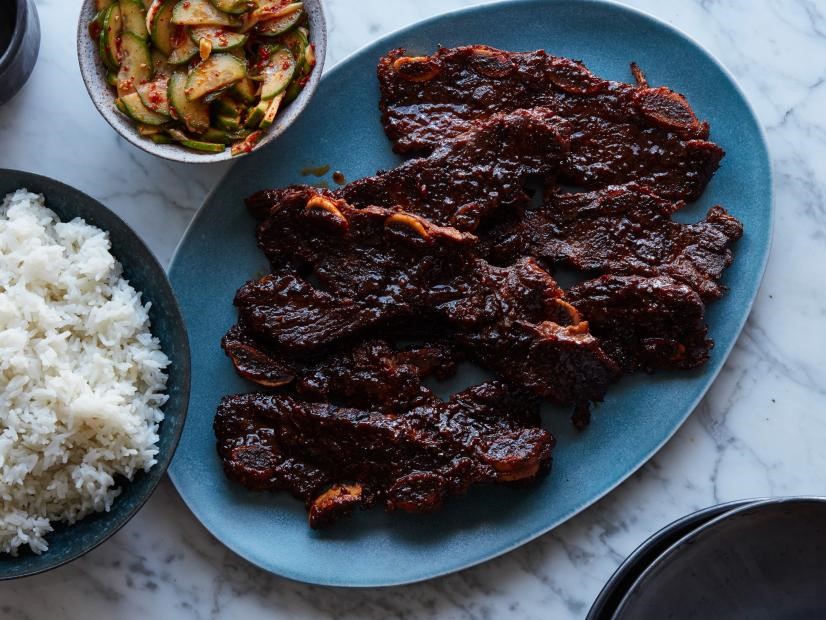
Instant Pot Korean Style Short Ribs

Ingredients

¼ cup soy sauce

1 teaspoon crushed red pepper flakes

2 tablespoons grated ginger

2 tablespoons dark brown sugar

½ pear, peeled, cored and grated

2 cloves garlic, grated

2 tablespoons sesame oil

2 pounds bone-in beef short ribs (1/4-1/2 inch thick)

Directions

1.    Whisk together the soy sauce, red pepper flakes, ginger, brown sugar, pear, garlic, sesame oil and ¼ cup of water in a 6-quart Instant Pot.  Place the short ribs on top and follow the instructions for locking the lid and preparing to cook.  Set to pressure cook on high for 25 minutes.  After 25 minutes follow the instructions for quick release and wait until the quick release cycle is complete.  Be careful of any remaining steam and unlock and remove the lid.  Using a slotted spoon, transfer the meat to a large platter, cover and set aside.

2.    Set the pot to saute on high for 30 minutes and let the remaining liquid reduce until it becomes a thick sauce, about 15 minutes.

3.    Set the pot to off and pour sauce over the meat.

       Serve with rice.